Blog
Guides on WordPress maintenance, SLA tracking, and agency client portals.
22 articles
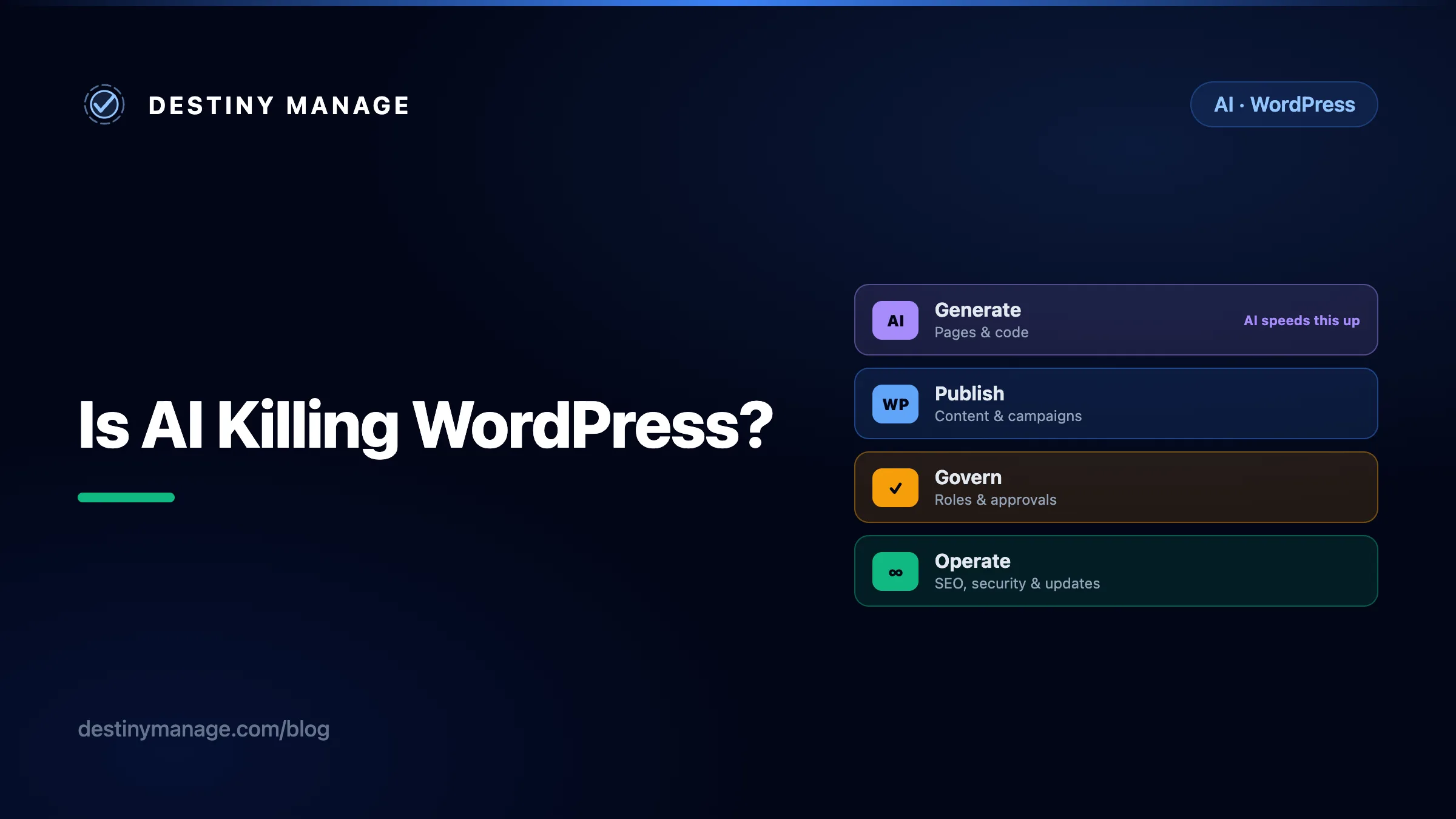
Is AI Killing WordPress?
AI can generate a website in minutes, but what happens after launch? A closer look at custom-theme development, developer productivity, unpredictable AI edits, content governance, and WordPress's new AI foundations.
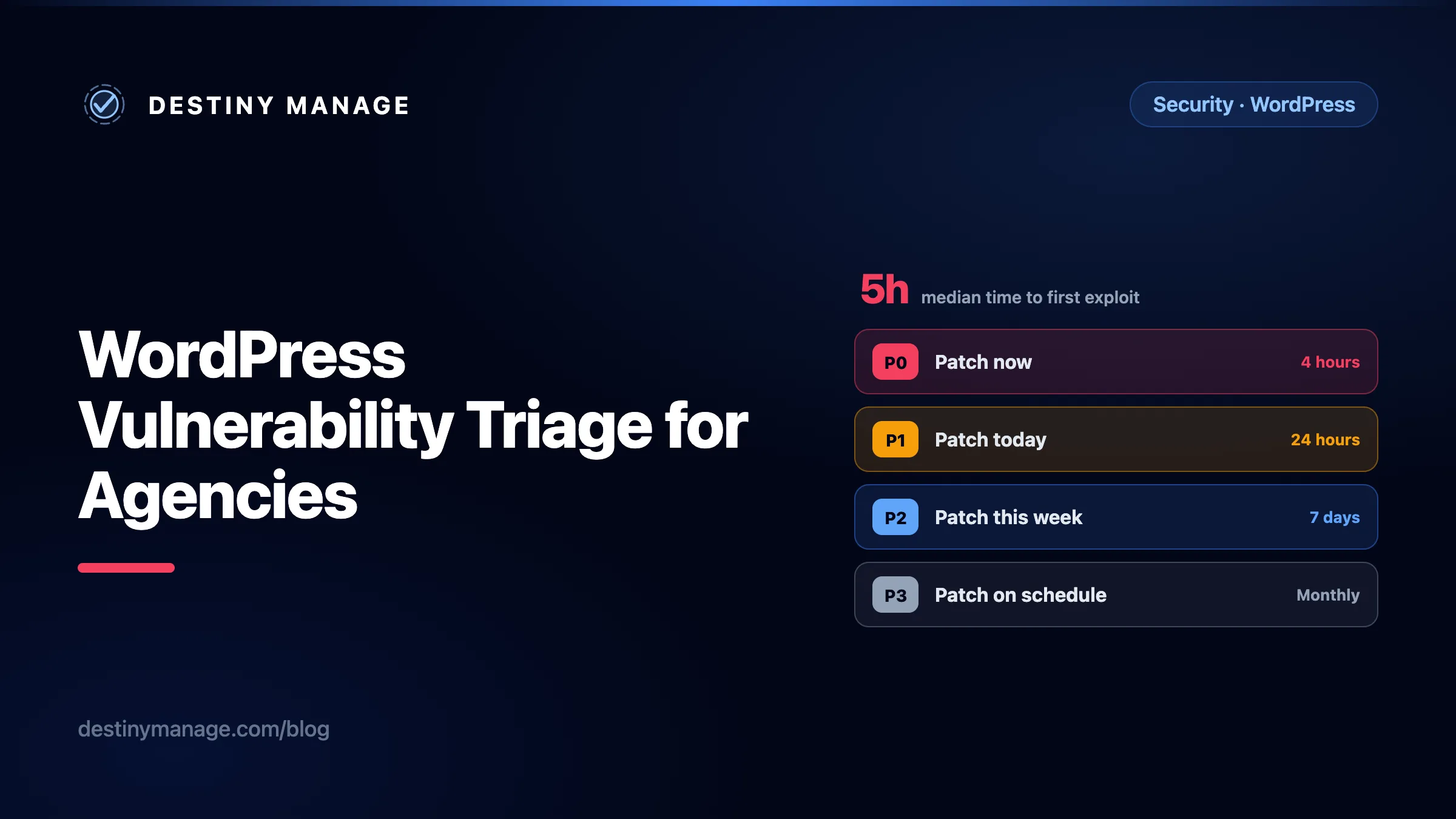
WordPress Vulnerability Triage for Agencies: Building a Patch SLA That Beats the Exploit Window
Attackers were exploiting the July 2026 WordPress core flaw about 90 minutes after the fix shipped, and 46% of ecosystem vulnerabilities have no patch on the day they are disclosed. A practical triage playbook for agencies: four response classes with real clocks, what to do when no patch exists, how to detect plugins silently closed on WordPress.org, a first-48-hours runbook, and the care plan clauses that make it work.
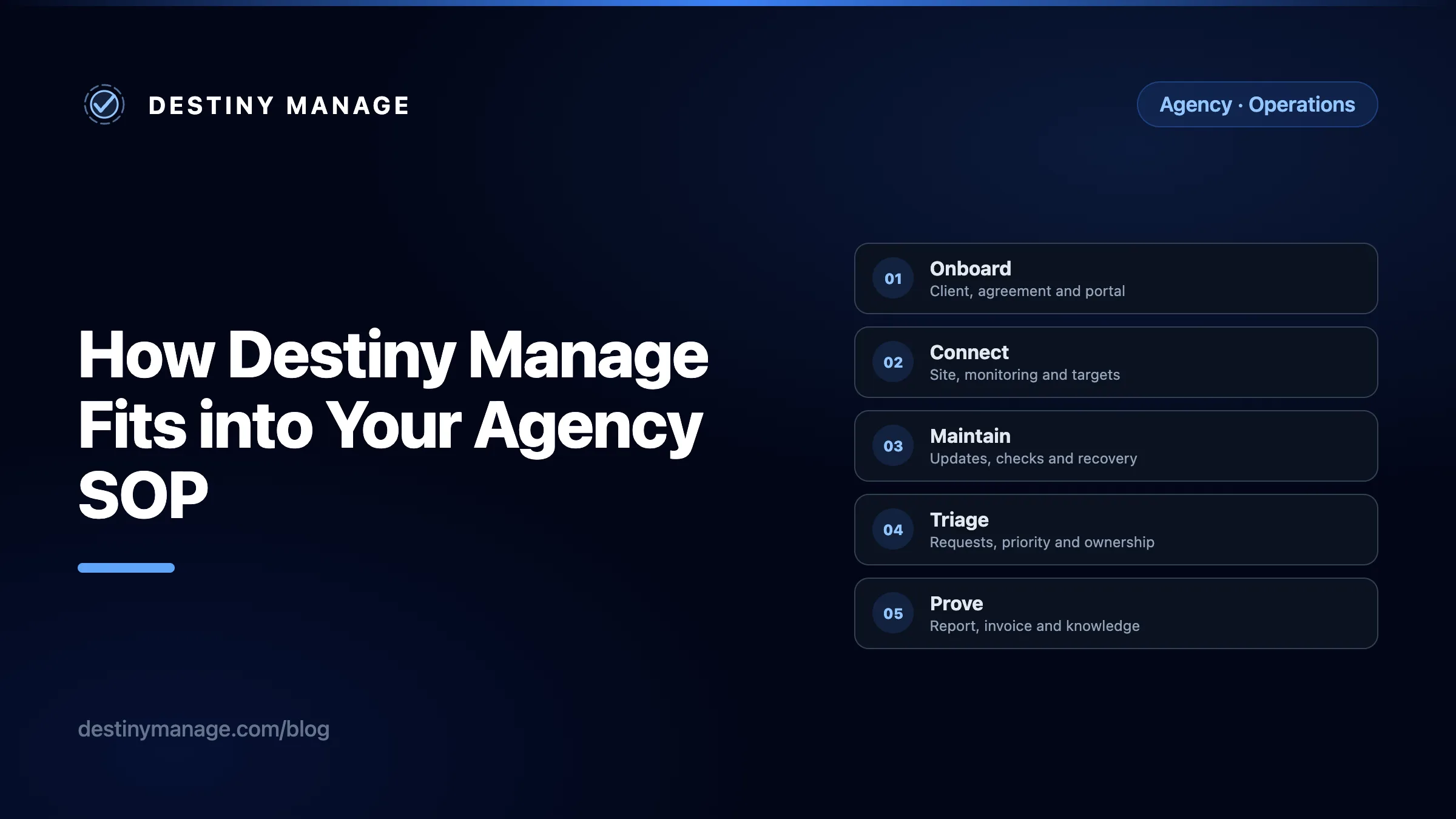
How Destiny Manage Fits into Your Agency SOP
A practical WordPress care-plan SOP showing how Destiny Manage fits into client onboarding, site maintenance, change requests, SLA tracking, delivery, monthly reporting, billing, and client documentation.
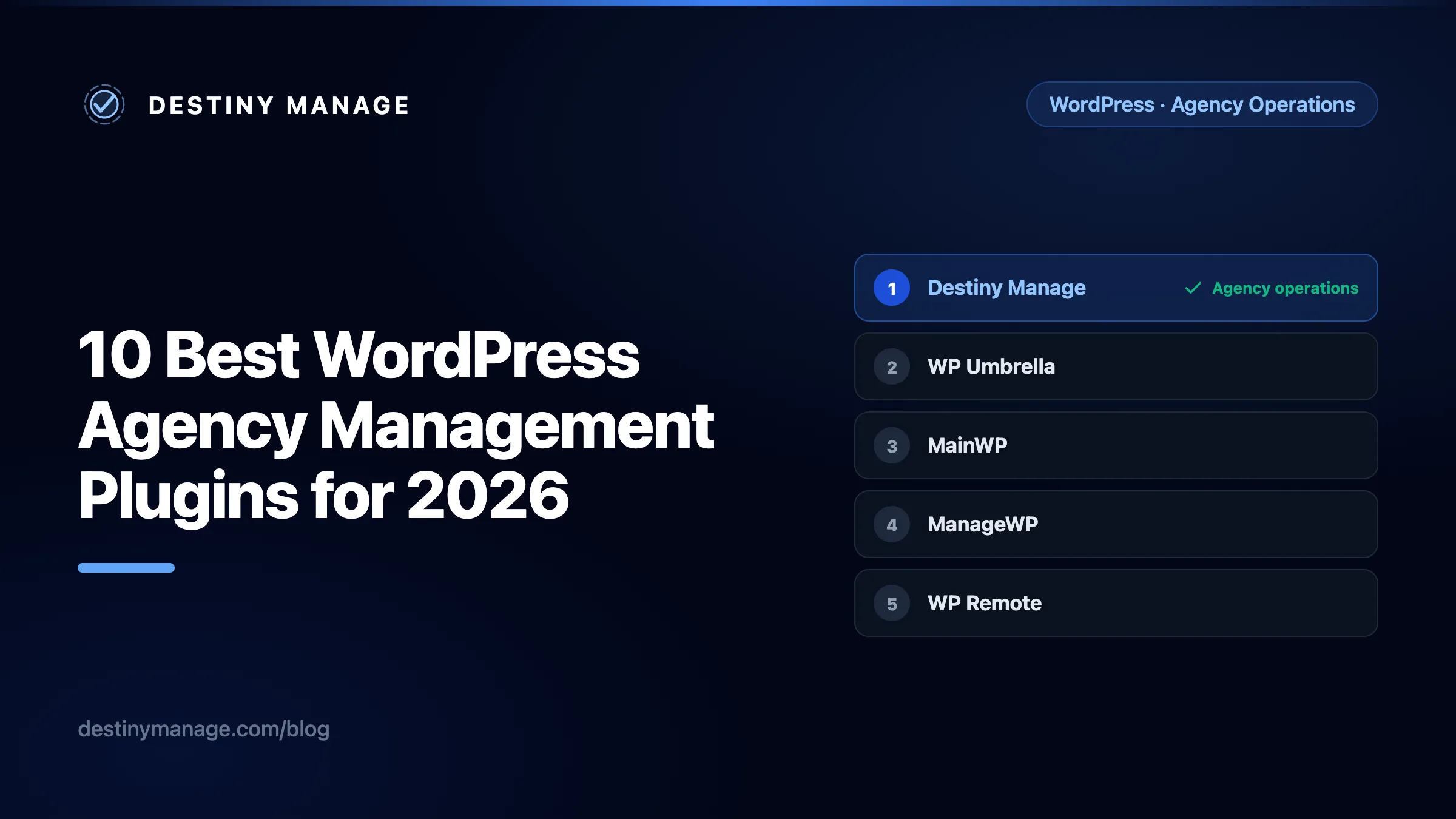
10 Best WordPress Management Tools for Agencies in 2026
A practical comparison of the 10 best WordPress management tools for agencies in 2026: what each tool does, its pros and cons, deployment model, client-facing features, and the workflow it fits best.
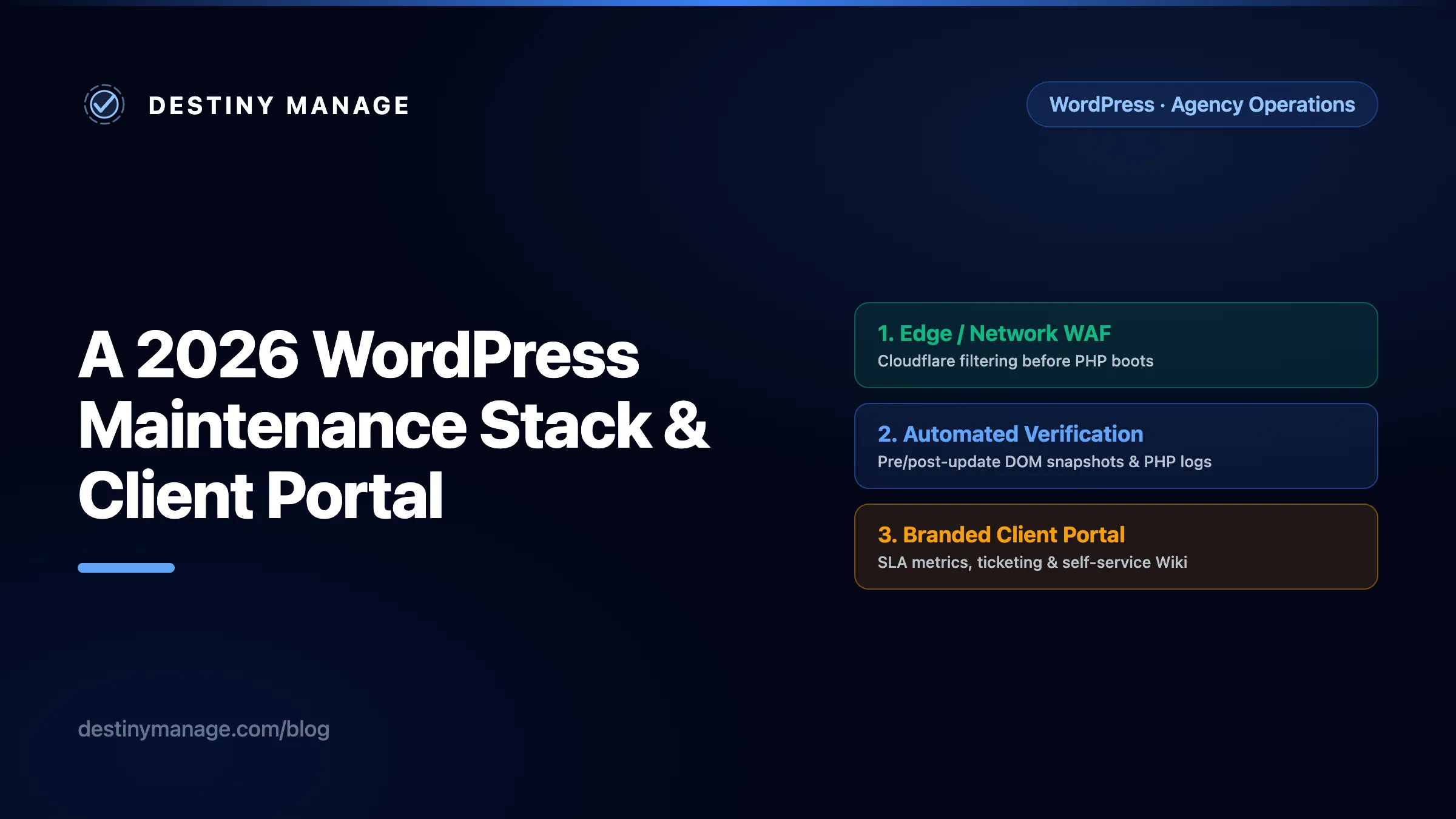
Stop Selling “Plugin Updates”: A 2026 WordPress Maintenance Stack for Agencies (and the Client Portal That Proves It)
When care-plan clients cancel because they think you just click ‘Update’ on Wordfence once a month, the problem is not client ingratitude—it is an invisible maintenance stack and a portal that acts as a file locker rather than a strategic system of record. Here is how agencies are building fact-checked operational stacks and branded portals in 2026.
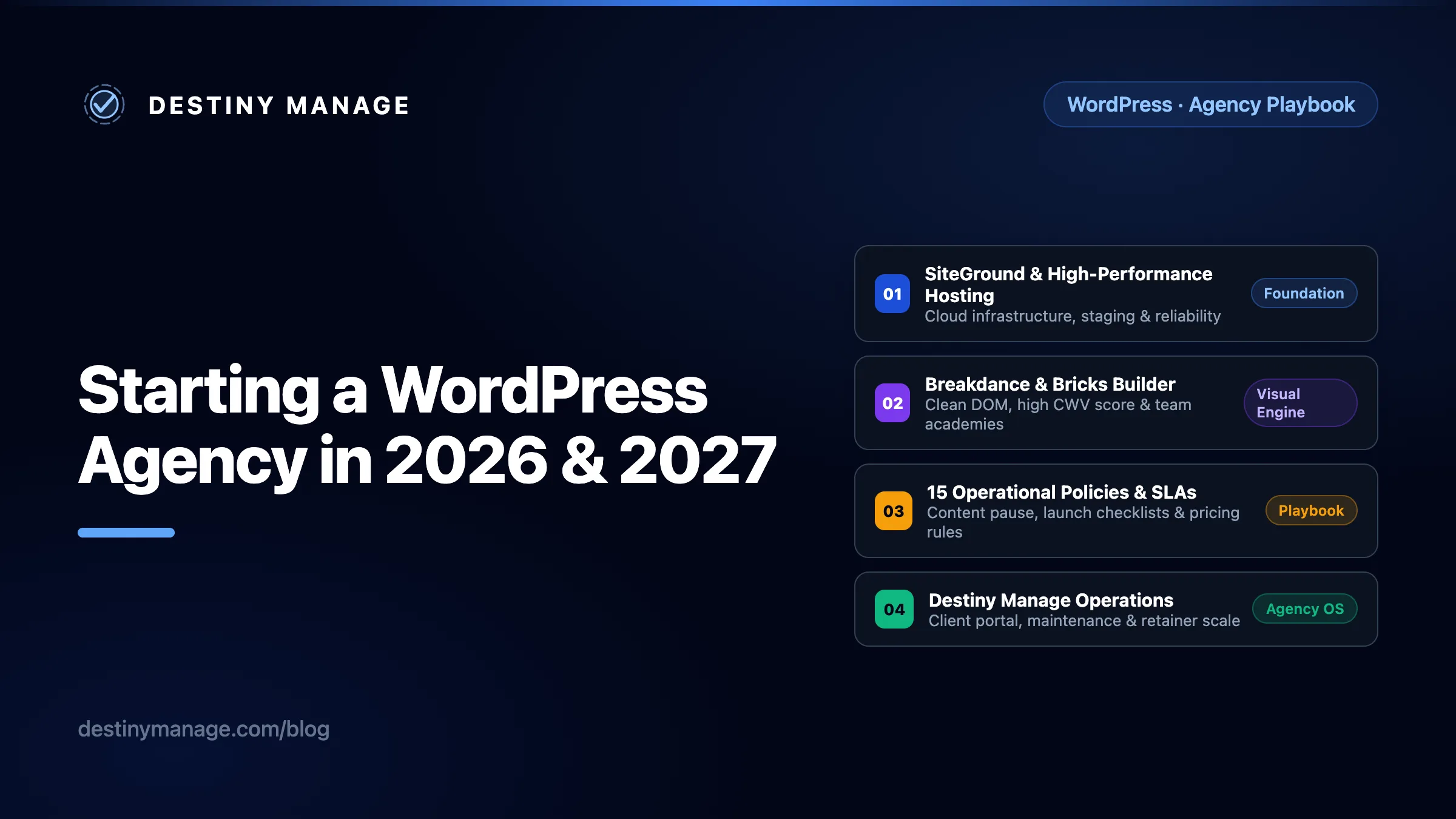
Starting a WordPress Agency in 2026 & 2027: The Complete Playbook for Hosting, Builders, Niche Portfolios & Operations
Starting a WordPress agency in 2026 requires more than installing a generic theme. A practical, step-by-step playbook covering the top hosting platforms (SiteGround vs WP Engine), custom code pipelines (Gutenberg blocks & ACF Pro with Git staging deployments) versus modern DOM-efficient builders (Breakdance & Bricks vs Elementor & Divi), niche portfolio strategy, discovery calls, client branding, essential plugins, Google Workspace setup, and scaling retainers with Destiny Manage.
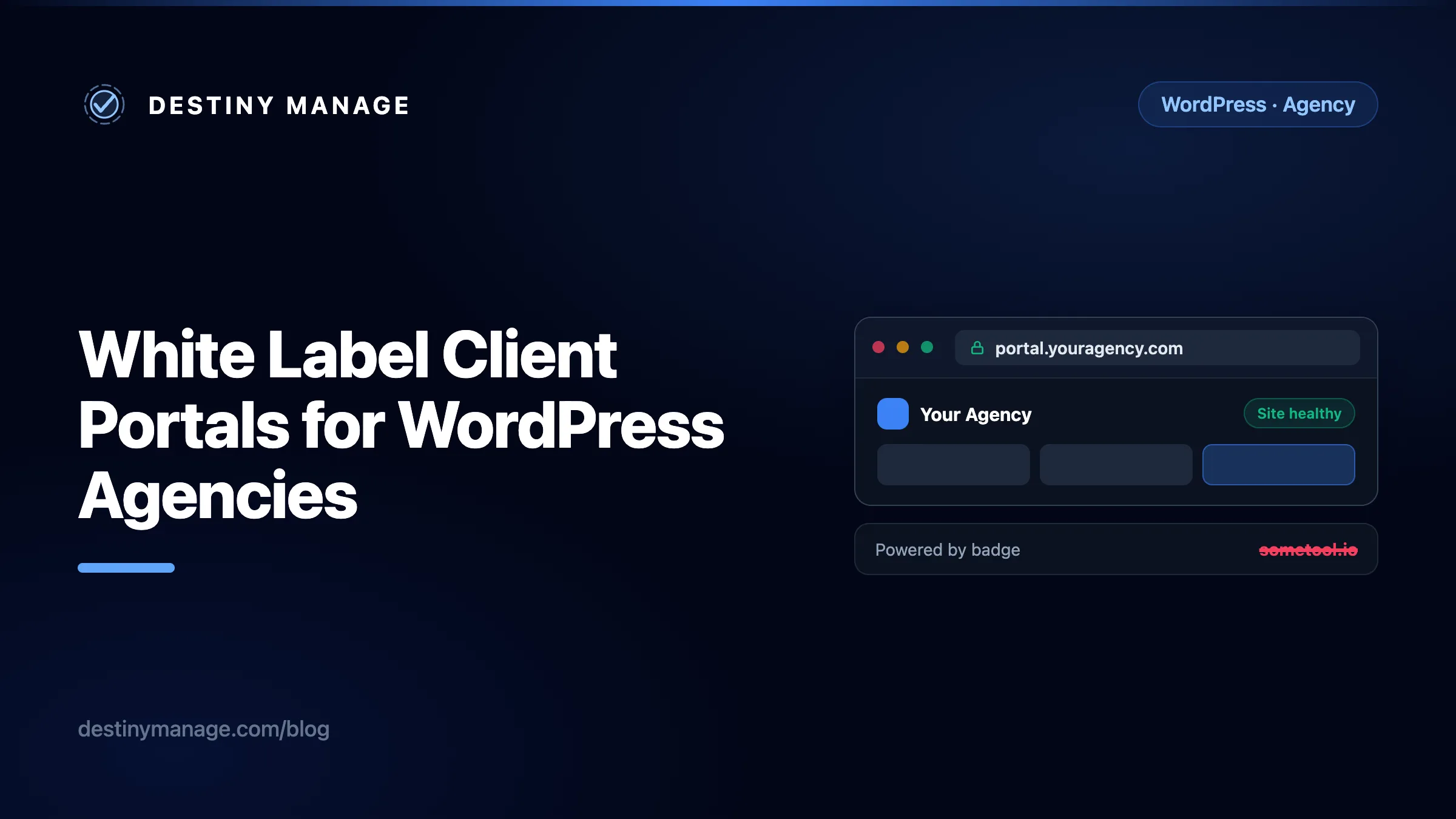
White Label Client Portals for WordPress Agencies: The Complete Setup Guide
White label is more than uploading a logo. A practical guide for WordPress agencies covering the six surfaces a client portal must brand (domain, login, emails, reports, invoices, and the small details), the email authentication work behind sending as your agency, build-versus-buy trade-offs, and a 10-point checklist for evaluating any portal platform.
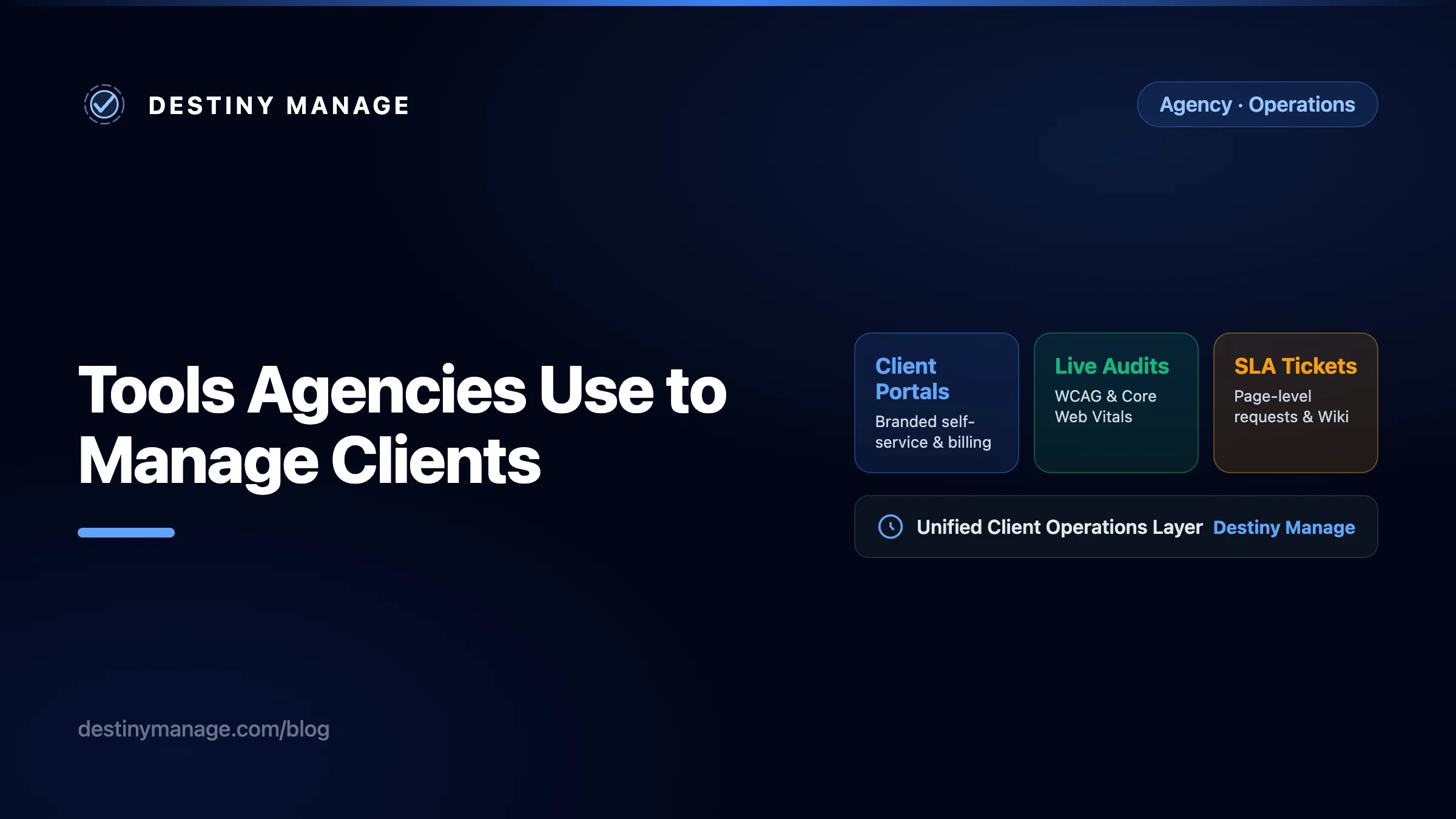
Tools Agencies Use to Manage Clients (And Where Destiny Manage Fits In)
An honest comparison of the client portals, operational workflows, and knowledge base tools modern web agencies use to manage client retainers, and where Destiny Manage fits in.
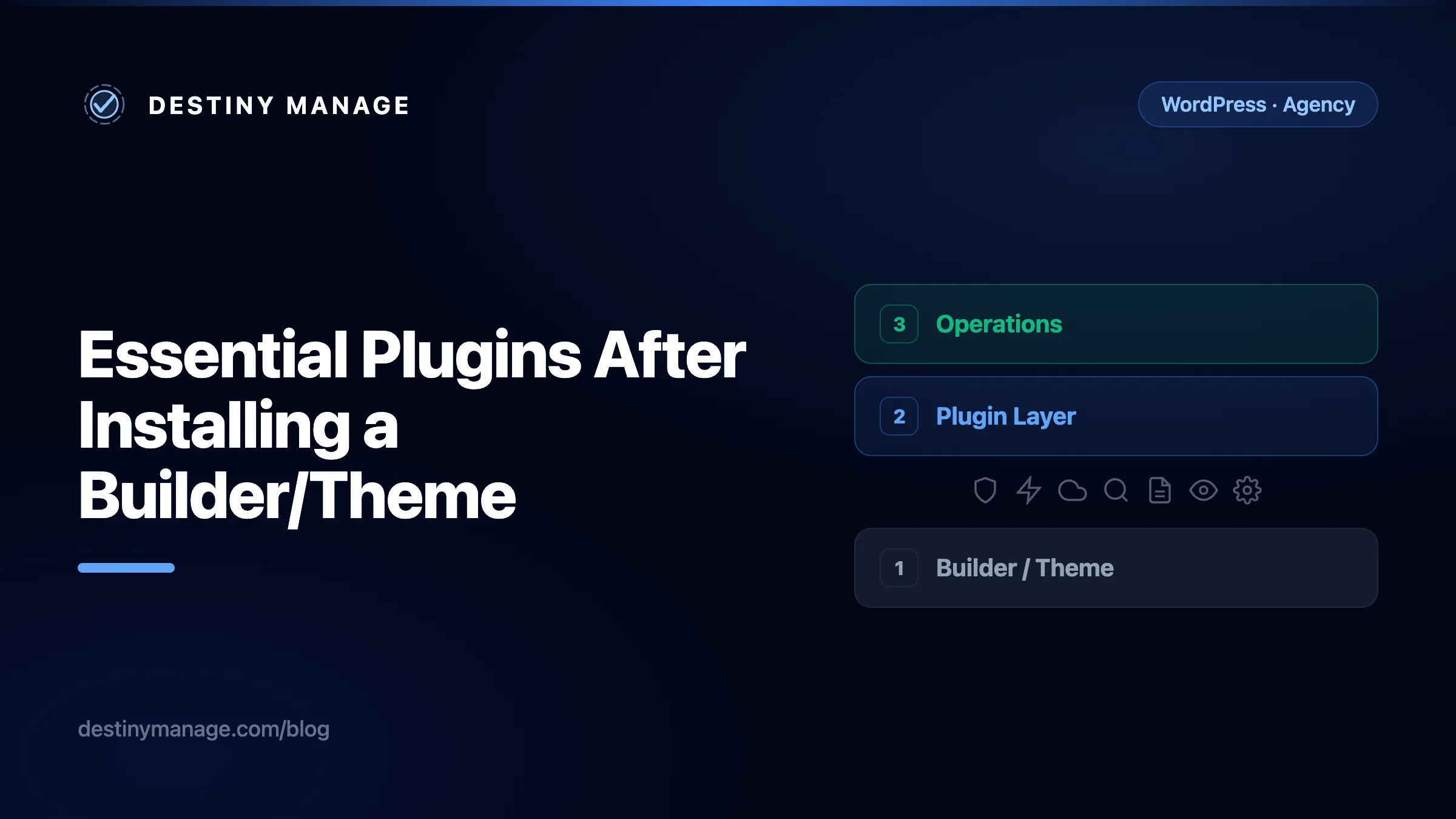
The Essential Plugins Every WordPress Agency Needs After Installing a Builder
Once the builder or theme is in place, the real work starts. A practical guide to the performance, security, backup, SEO, forms, accessibility, and maintenance plugins that turn a WordPress site from a nice-looking build into a stable, secure, and easy-to-manage system.
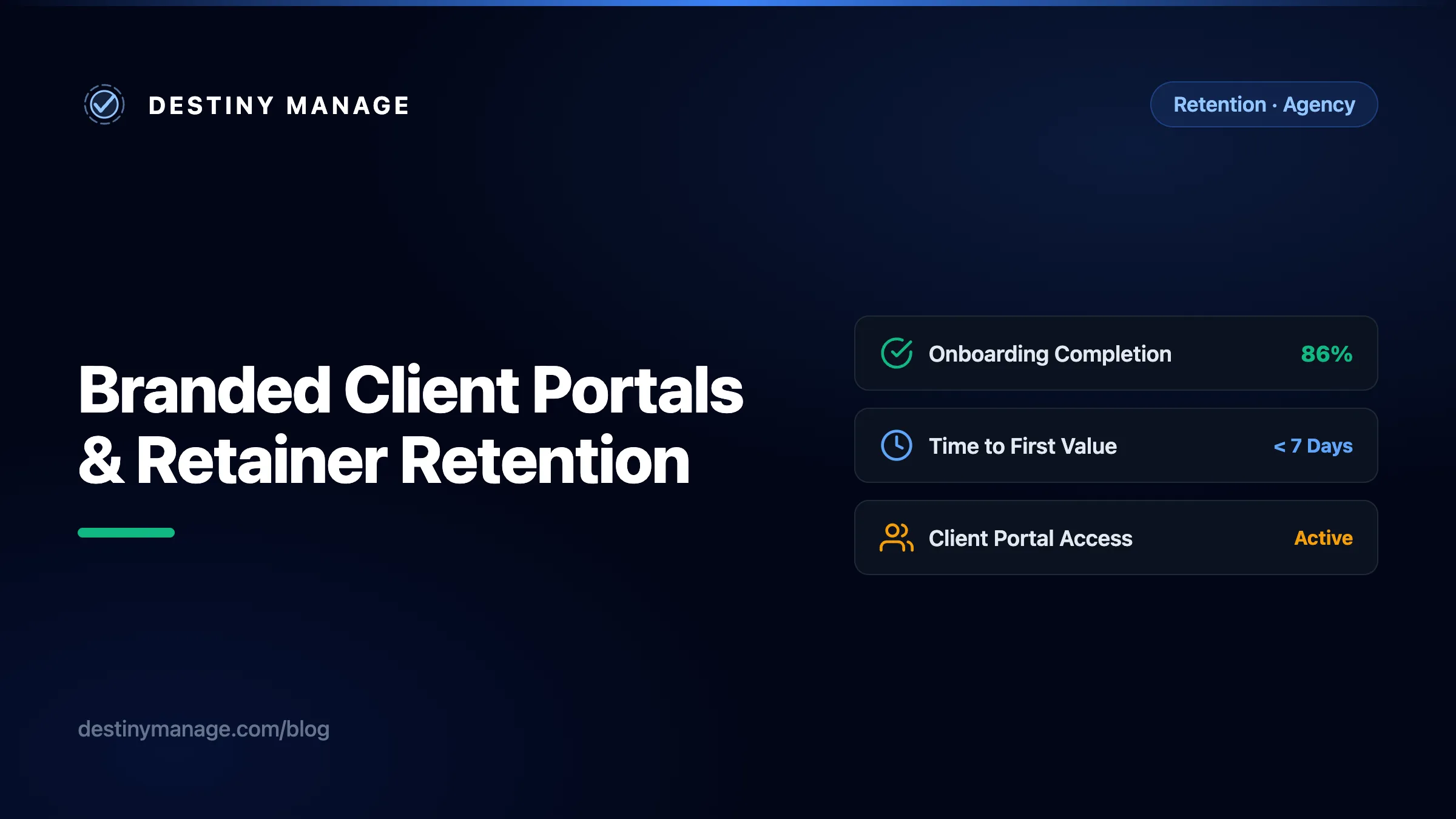
The First 90 Days: How Branded Client Portals Protect Agency Retainers from Early Churn
Up to 44% of B2B retainer churn happens in the first 90 days, often due to a poor onboarding experience and a perceived lack of progress. Here is how agencies use branded client portals to build transparency, accelerate time-to-value, and create institutional stickiness that keeps clients long-term.
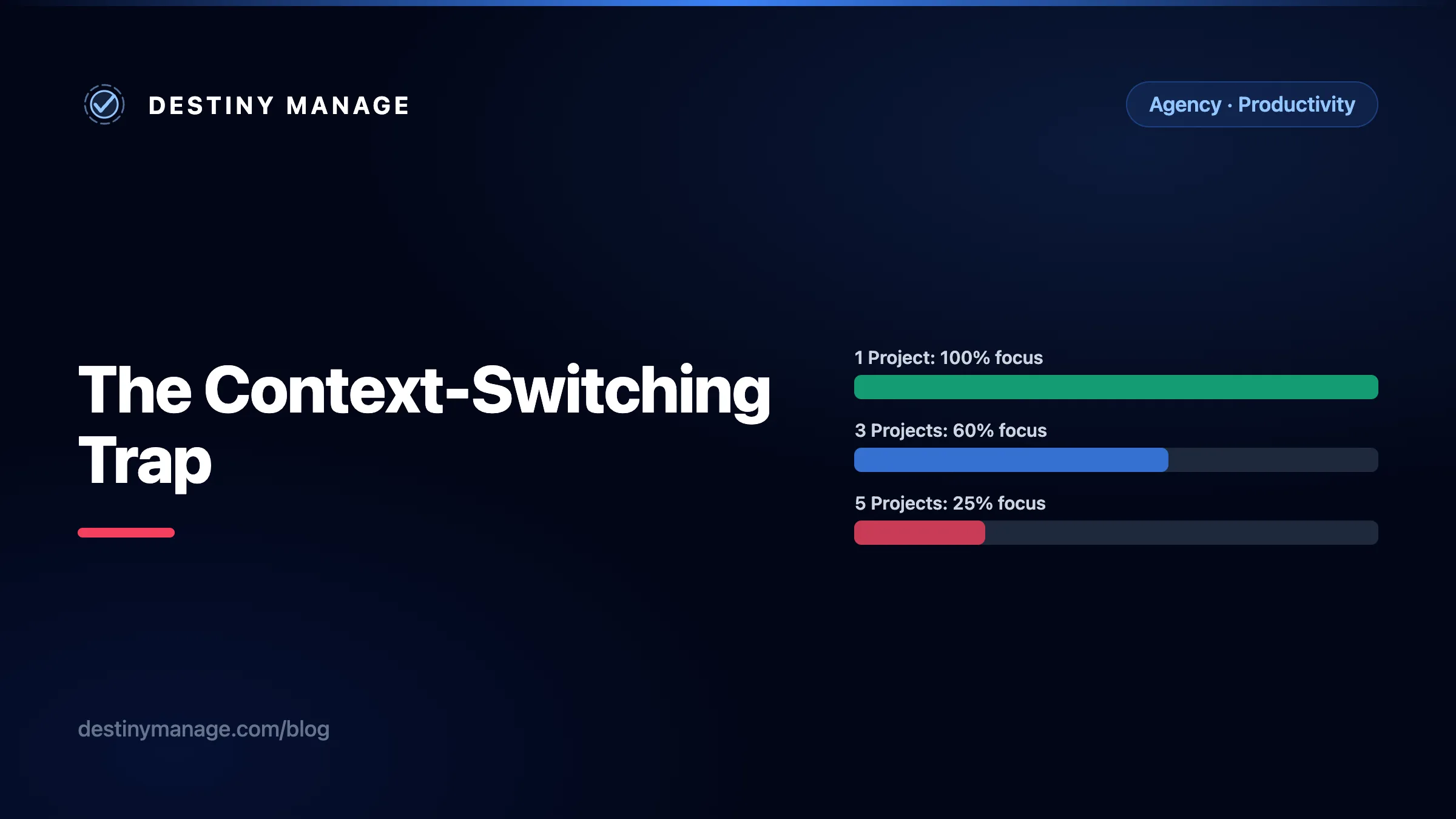
The Context-Switching Trap: How B2B Agencies Shield Developers and Protect Care Plan Margins
Small, ad-hoc client requests quietly wreck agency care plan margins. A look at the real cost of context-switching, drawing on research from UC Irvine, the University of Washington, and Gerald Weinberg, plus a practical way to structure client requests so developers stay focused.
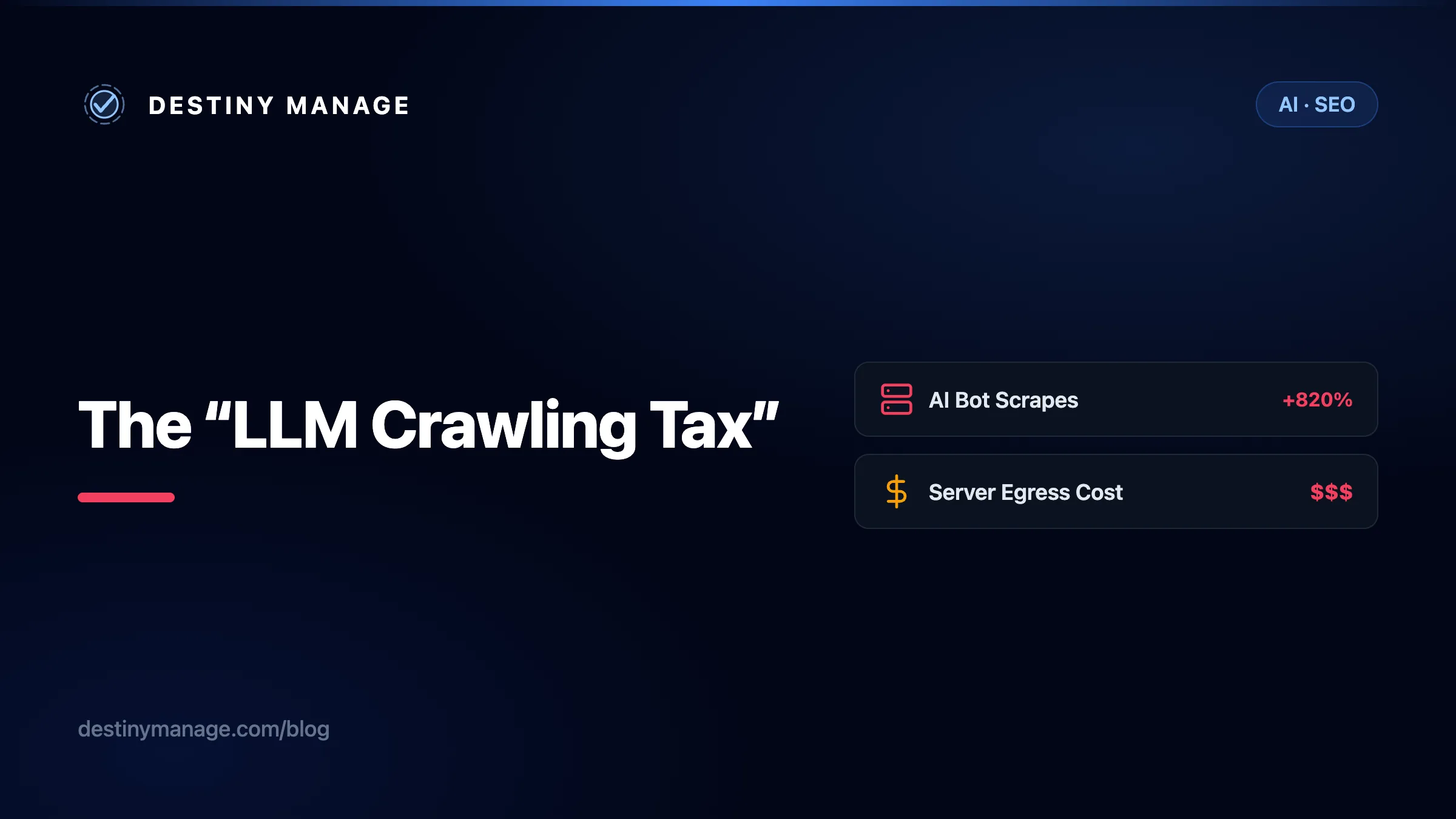
The "LLM Crawling Tax": A Quantitative Analysis of AI Scraping Overhead on Cloud Server Budgets
AI crawlers are consuming massive bandwidth and server resources to scrape training data. Here is an in-depth quantitative analysis of the dollar cost of LLM scraping, its performance impact on web servers, and how to rate-limit bots without hurting your search engine visibility.
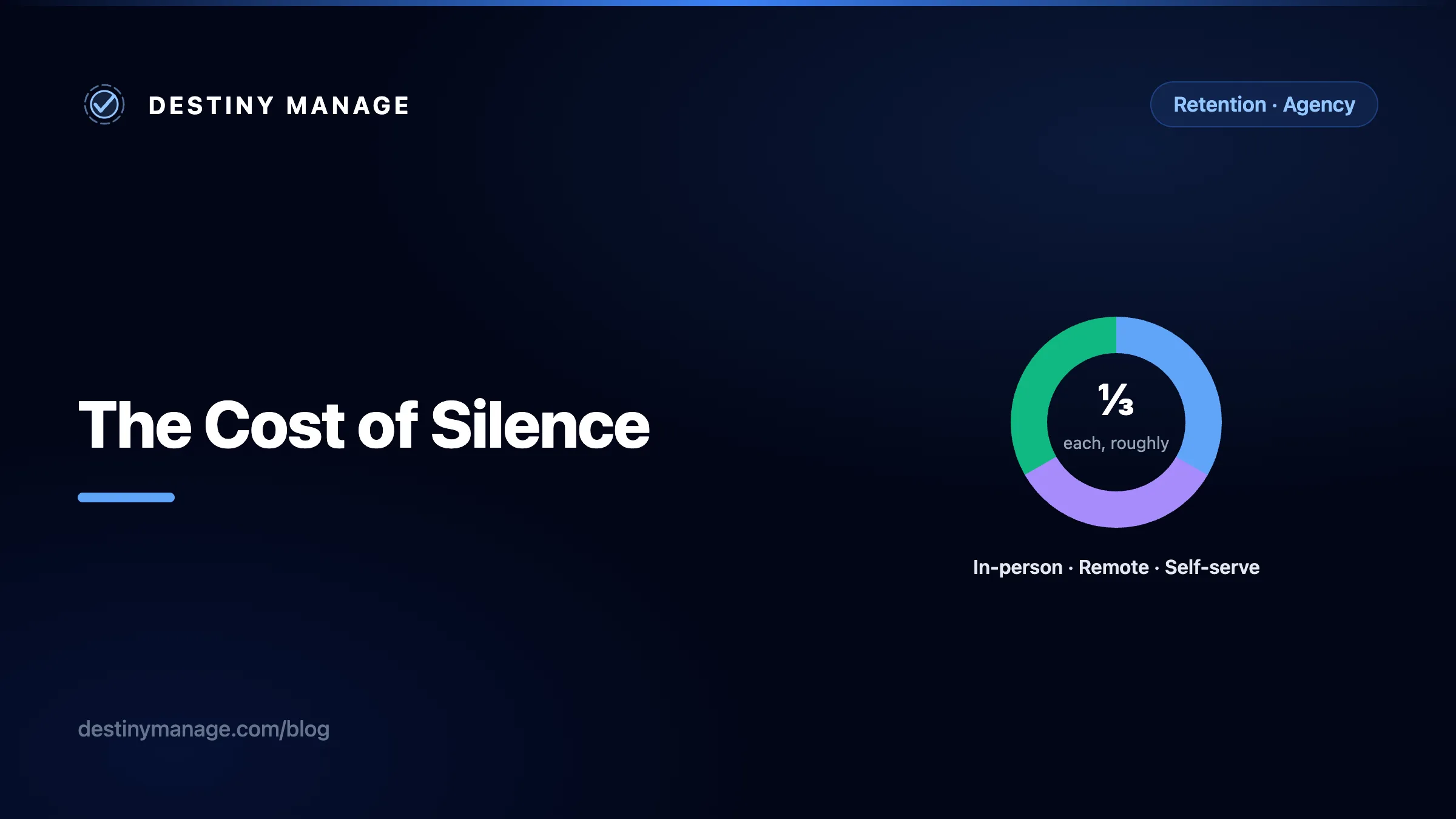
The Cost of Silence: Why Client Portals are the Underrated Key to Agency Retention
Retention has an outsized effect on agency profit, and communication breakdown is one of the most common reasons clients quietly leave. A look at B2B client behaviour, McKinsey's self-service research, and how white-labelled portals turn agency retention from a chore into a competitive advantage.
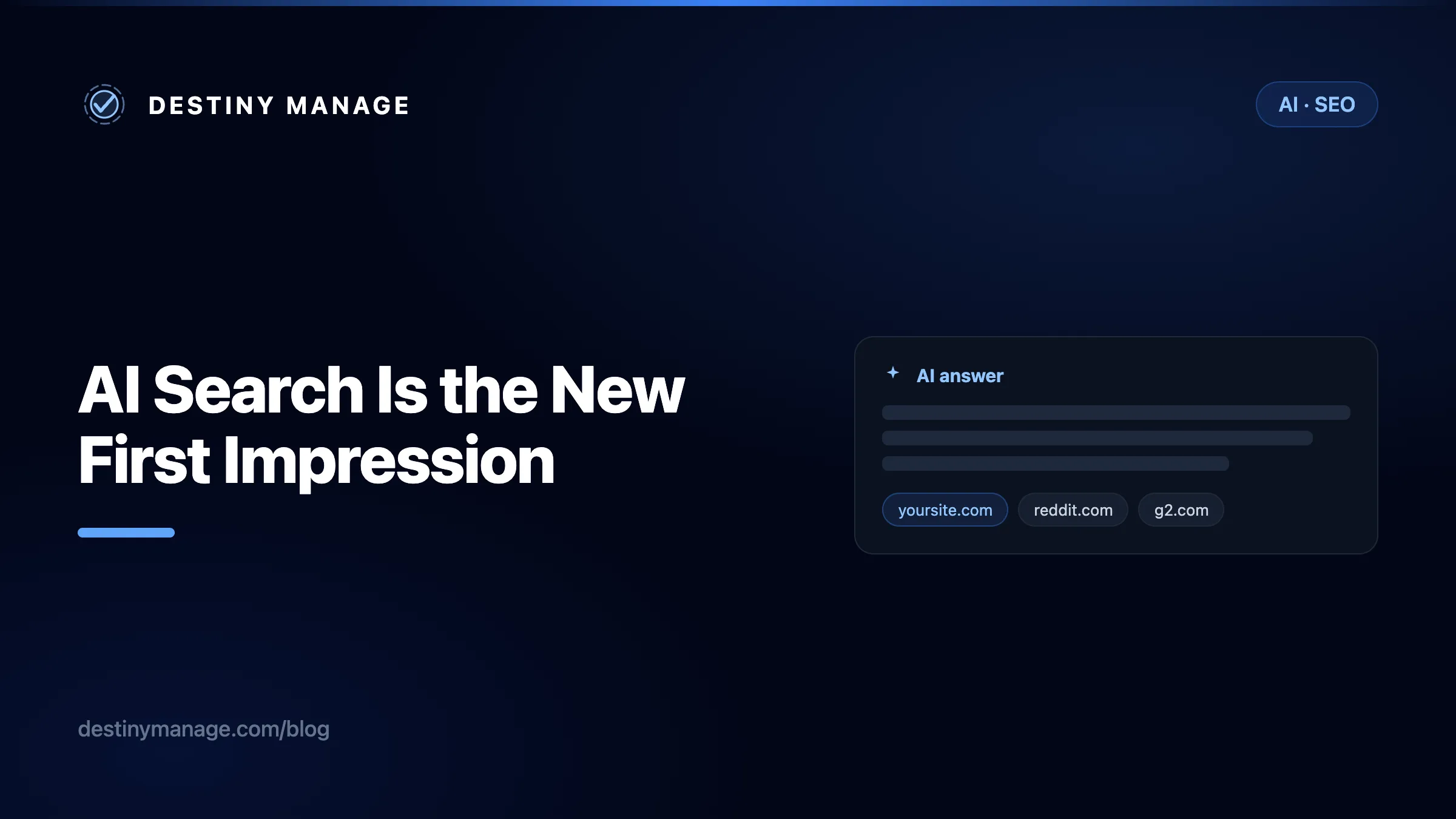
AI Search Is the New First Impression: How to Make Sure AI Describes Your Brand Correctly
More people now research brands by asking AI than by clicking through to a website. AI Overviews, ChatGPT, and Perplexity summarise who you are before a visitor ever arrives, drawing on your own site and on third-party sources you do not control. Here is how AI search changed brand discovery, what Generative Engine Optimisation (GEO) and Answer Engine Optimisation (AEO) mean, and how to make sure AI describes your brand accurately.
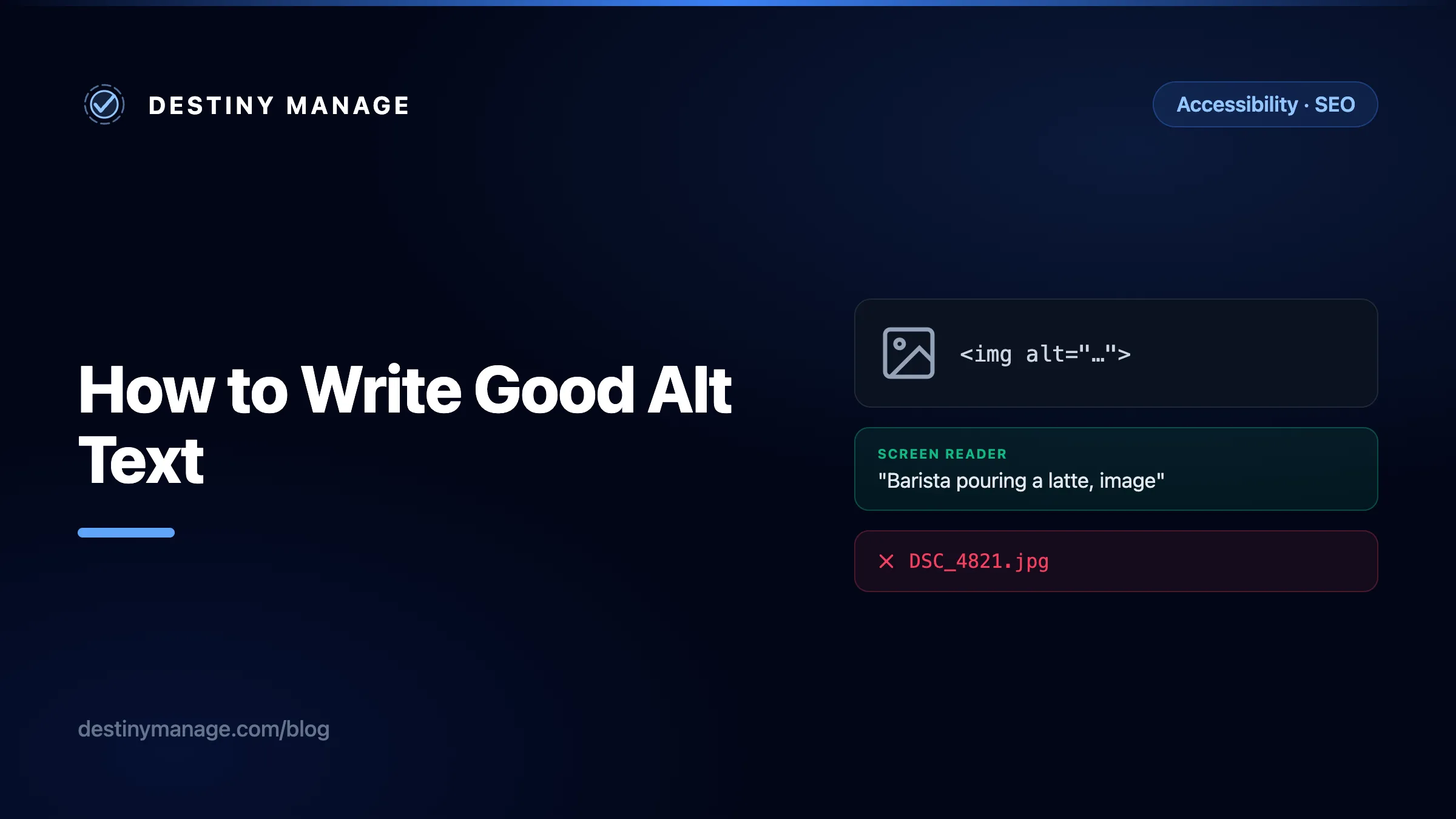
How to Write Good Alt Text (With Before-and-After Examples)
Alt text describes an image for screen reader users and search engines, but most of it is missing, copied from the filename, or written for nobody. A practical guide to writing good alt text: how to decide an image's role (informative, decorative, functional, complex), exactly what to write and what to skip, the most common mistakes, and how the same alt text helps both accessibility and image SEO.
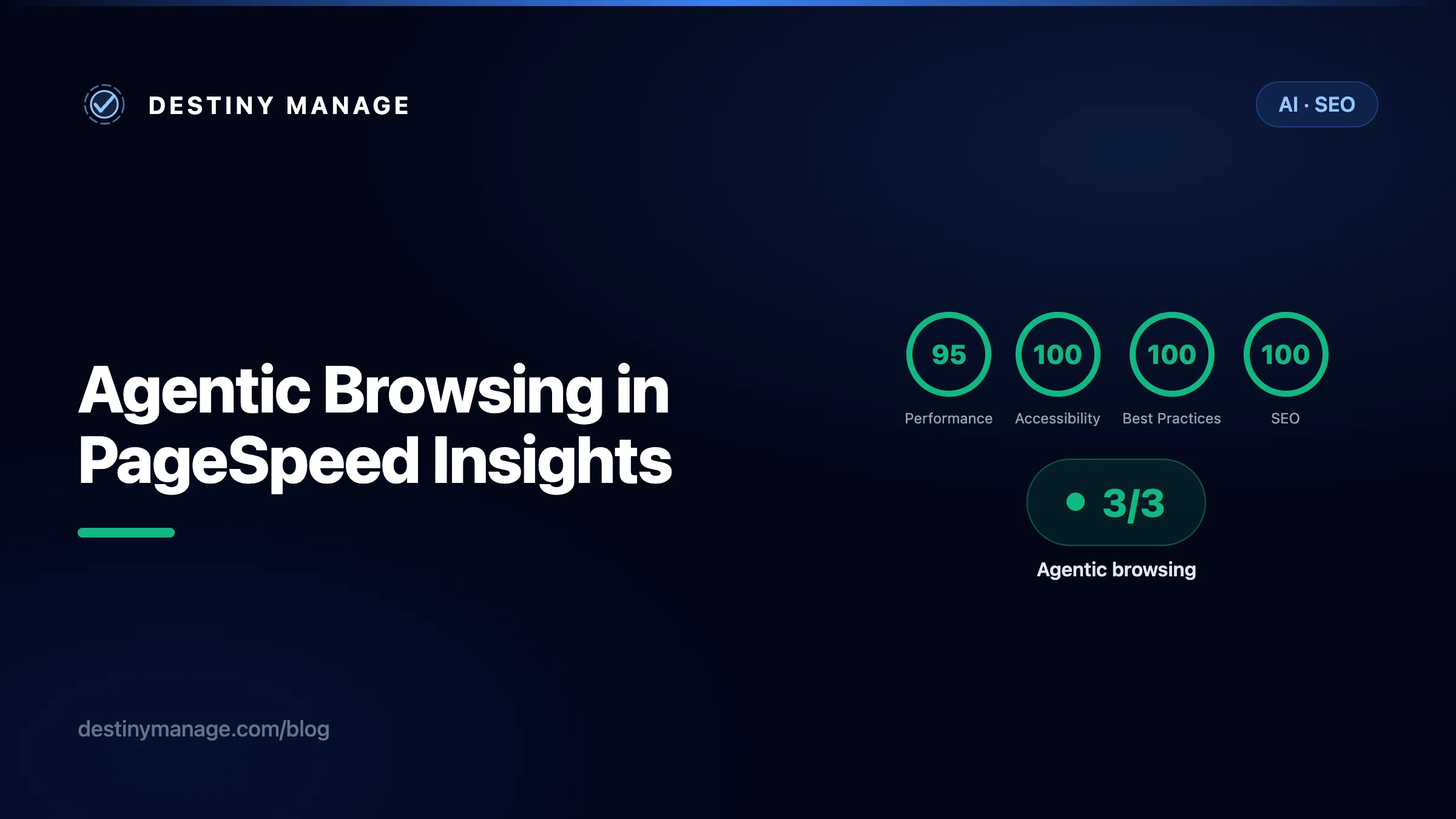
Agentic Browsing in PageSpeed Insights: What Google's New Category Means for Your Site
PageSpeed Insights now reports a fifth category, Agentic browsing, measuring how ready your site is for AI agents. Here is what it checks (WebMCP, the accessibility tree, layout stability, and llms.txt), why there is no 0 to 100 score, how to improve each signal with code examples, and where the agentic web is heading.
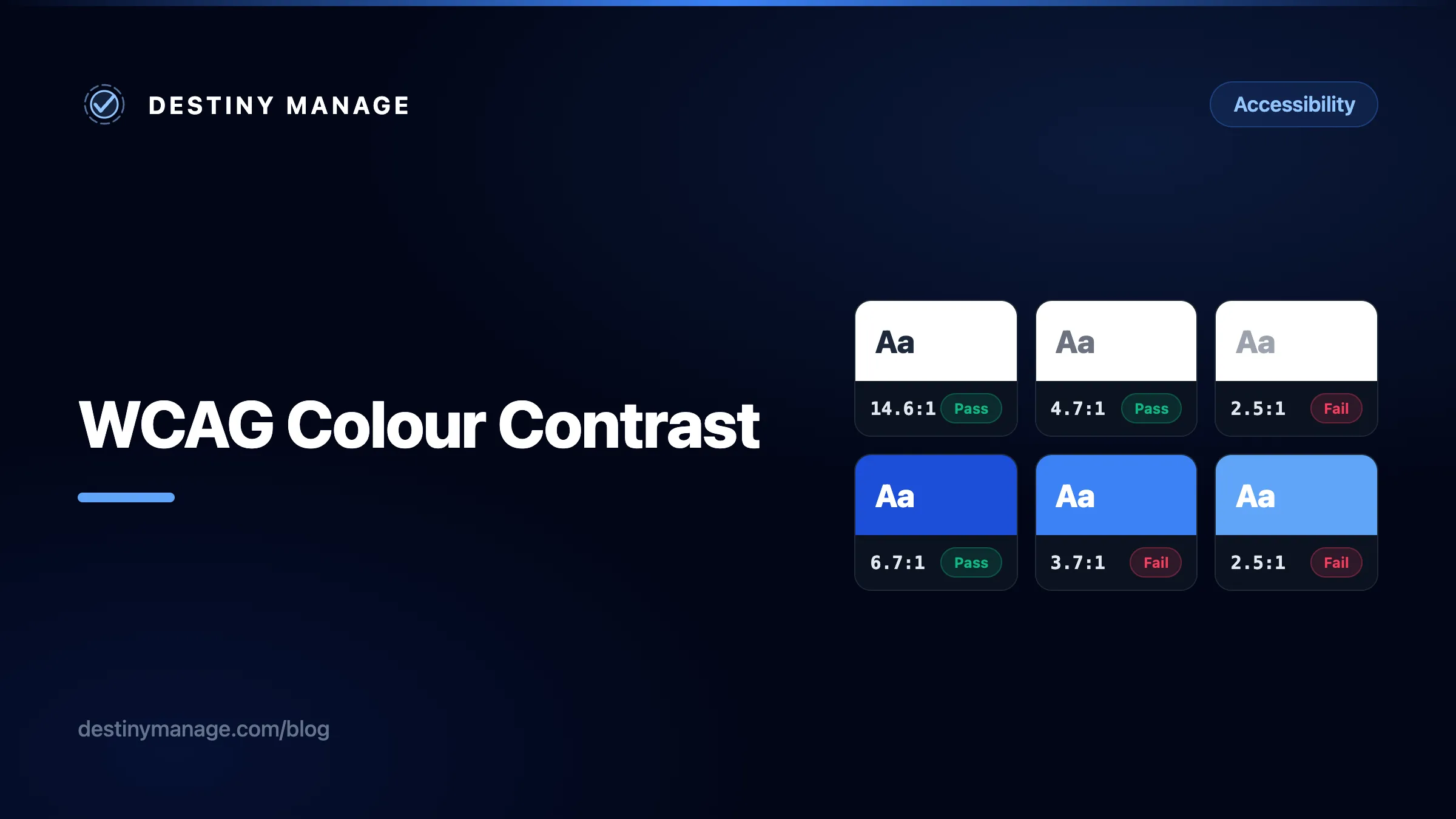
WCAG Colour Contrast: What It Covers and Where Teams Get It Wrong
A practical guide to WCAG contrast requirements beyond text: non-text elements, hover states, and focus indicators, with tools and approaches for checking your entire colour palette.
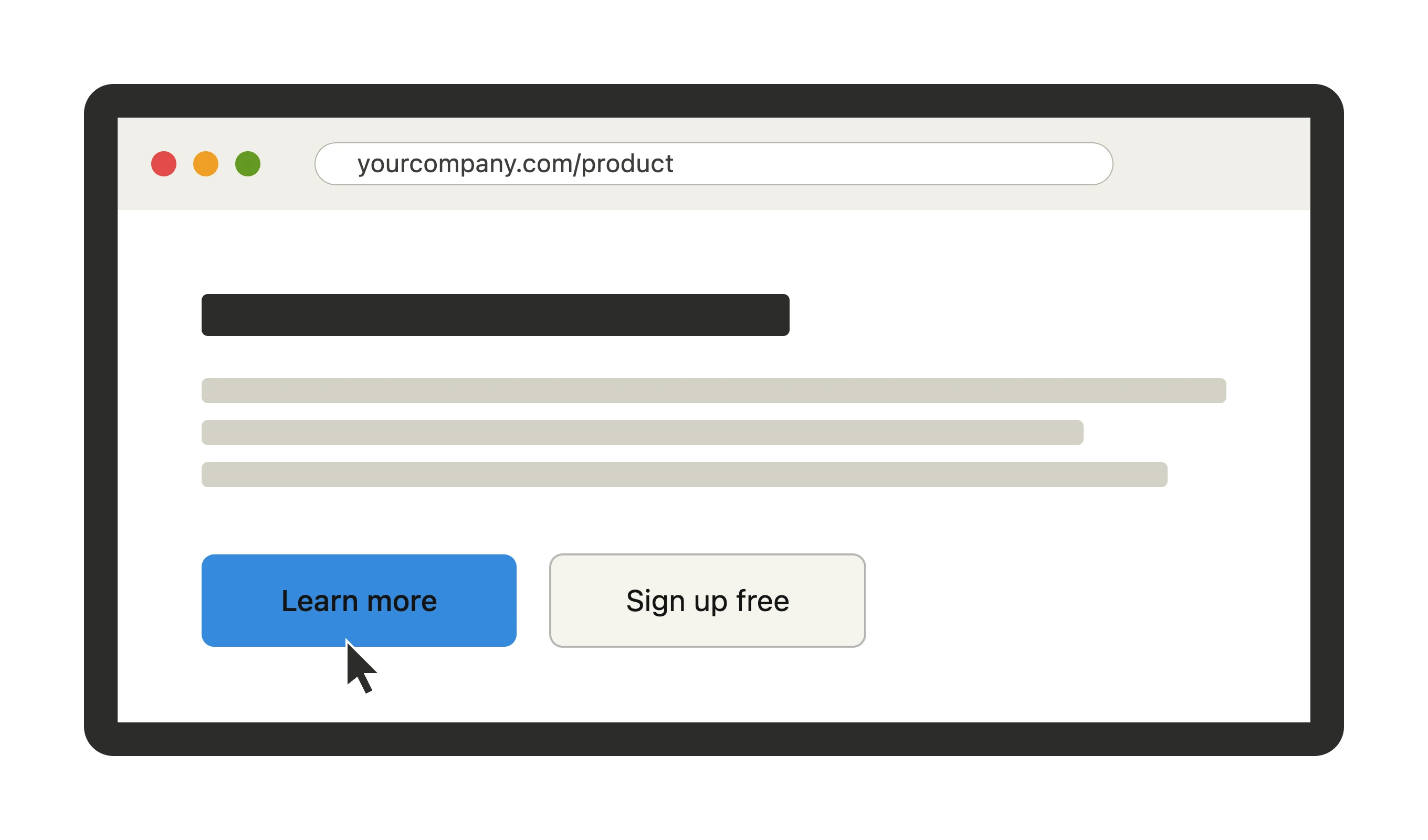
Why “Learn More” Links Hurt Accessibility (and What to Use Instead)
“Learn more” and “Read more” links look clean in a mockup but leave screen reader users with no idea where they lead. Here is why vague link text is a problem, why it keeps appearing in designs, how designers and developers can fix it together, and who should own it.
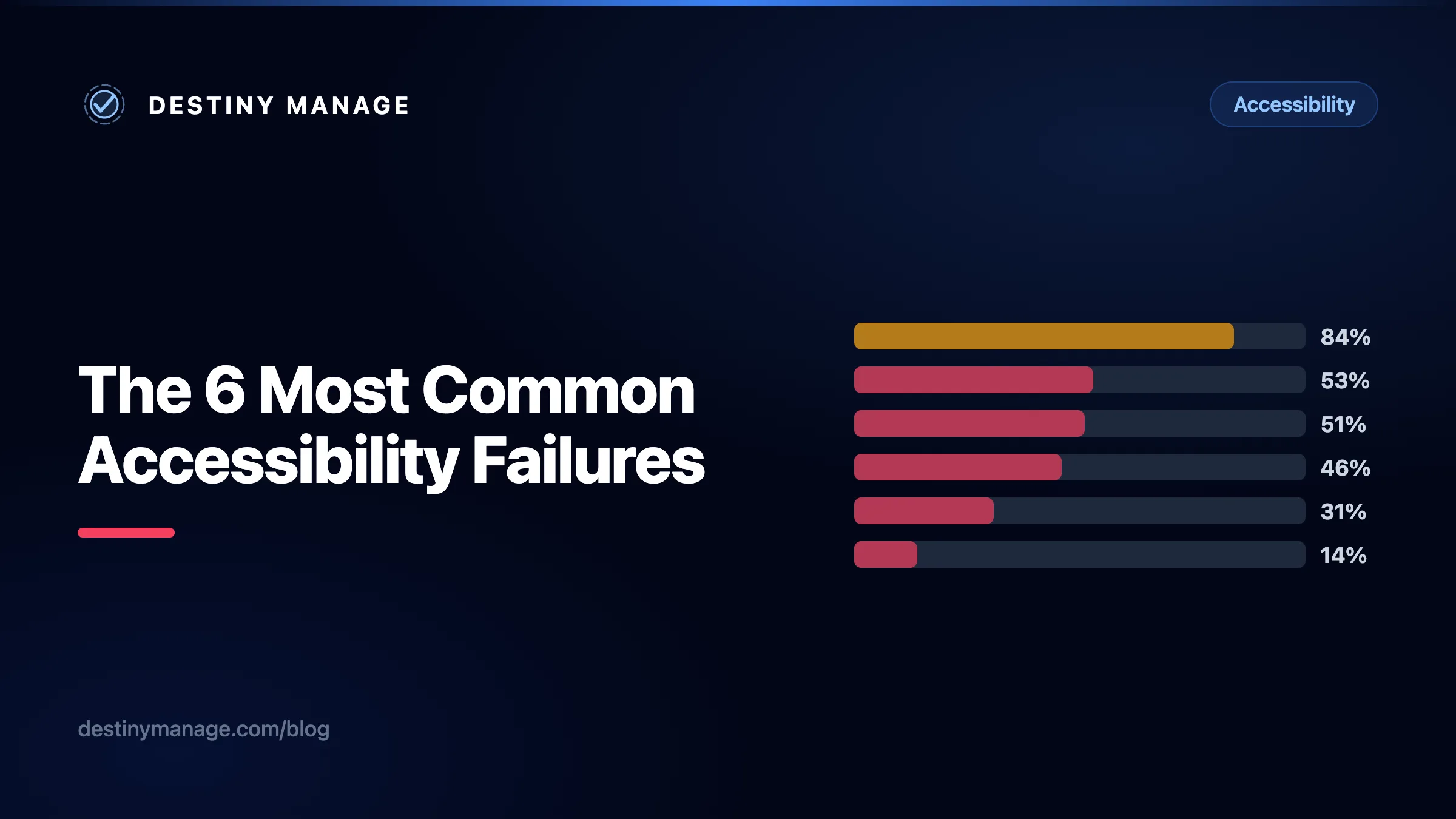
The 6 Most Common Accessibility Failures (and How to Fix Each One)
Low contrast, missing alt text, empty links, unlabelled form fields, empty buttons, and missing document language account for most WCAG failures found across the web. Here is what each one means, who it affects, and a quick code fix.
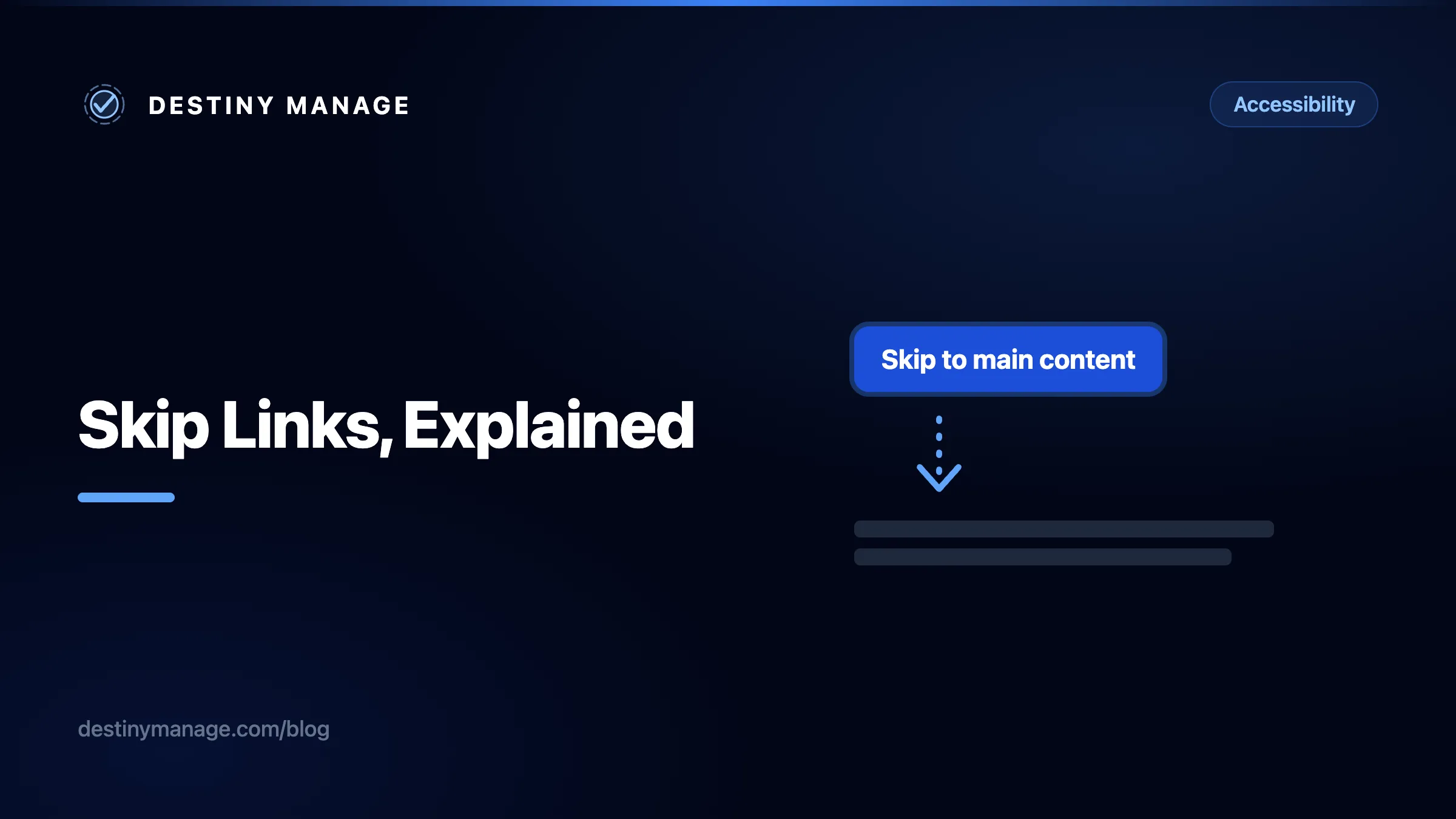
Skip Links: What They Are, Why They Matter, and How to Add One
A skip link lets keyboard and screen reader users jump past repeated navigation straight to the main content. Here is what a skip link is, why WCAG requires one, how to build one that actually works, and how Destiny Manage detects a missing skip link.
Essential Web Accessibility Resources
A curated set of web accessibility resources: WCAG standards, learning hubs, testing tools, contrast checkers, screen readers, and WordPress-specific guidance, plus where to focus first.
Why Accessible Websites Rank Higher on Google
A breakdown of what the research says about the connection between WCAG compliance and organic search rankings, and why the mechanism is less mysterious than it sounds.