The First 90 Days: How Branded Client Portals Protect Agency Retainers from Early Churn
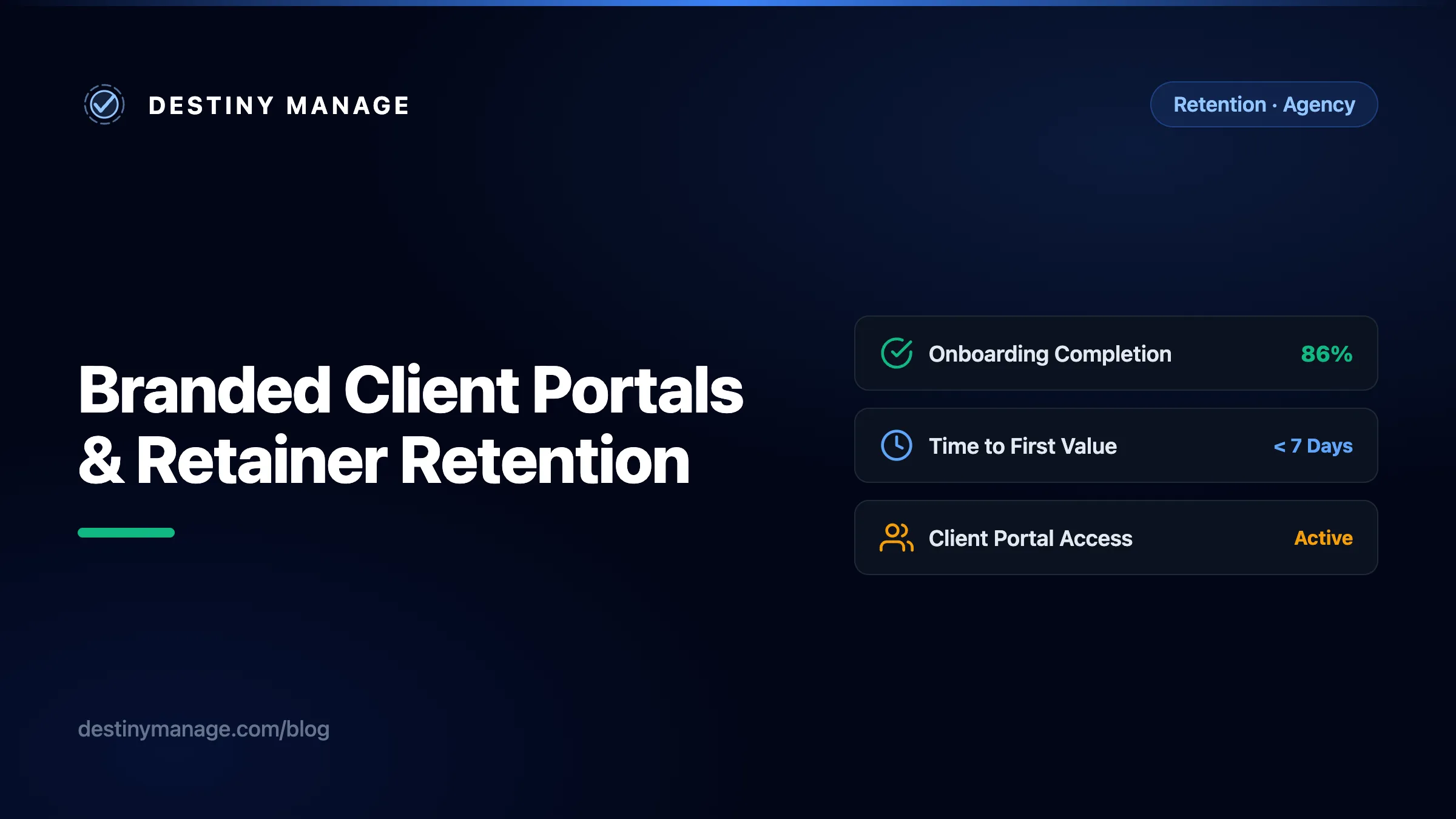
Winning a B2B retainer is a major milestone, but it is also where the real challenge begins. Agencies can reduce early churn by using branded client portals to make progress visible, centralize onboarding, and shorten time to first value. In practice, early onboarding is a common retention risk, so clearer communication and self-service access can improve the client experience. Classic research covered in the Harvard Business Review suggests that even small improvements in client retention can yield outsized lifetime value.

Written by Artur BurkaloFor over a decade, Artur has worked with agencies, run his own agency, and developed WordPress themes and plugins, including Destiny Elements.
Posted 7 July 2026
The 90-day cliff: Why B2B retainers are fragile
In the B2B world, the transition from sales to service delivery is a high-risk handover. The client has spent weeks or months negotiating, feeling excited about a new partner, and justifying the budget to their stakeholders. Once the contract is signed, however, the relationship enters the "delivery phase."
While early cancellation rates vary widely depending on the sector, model, and implementation, onboarding quality is a major retention factor. In practice, early onboarding is a common retention risk.
Looking at the data, why is this transition period so volatile?
- The "Black Box" Effect: Work is happening behind the scenes (setting up local environments, performing audits, configuring monitoring tools), but the client sees none of it. To them, the agency looks silent.
- Lack of Perceived Value: If the client does not experience an immediate, tangible benefit within the first few weeks, they begin to question the retainer fee.
- Onboarding Friction: Chaotic kickoff emails, lost documentation, and multiple login requests across scattered systems create frustration instead of confidence.
Typical B2B Retainer Retention Rate Over the First 90 Days
Illustrative scenario. Percentages represent typical benchmark cohorts rather than a universal baseline. Structured portal onboarding can improve early retention, though actual outcomes depend heavily on implementation and client segments.
Accelerating Time-to-First-Value (TtFV)
The clock starts ticking the second the contract is signed. In practice, agencies often find that helping clients reach their first value milestone quickly is associated with lower churn.
From an agency perspective, the solution is not just doing the work faster, but changing how early progress is perceived. In standard development and marketing agencies, achieving "value" can be slow because actual project delivery (e.g., a website rebuild or a search optimization campaign) takes weeks. This is where a client portal comes in: it acts as an immediate delivery mechanism for intermediate value.
The Slow Path (Email & Slack)
Agencies request site credentials, ask the client to review docs, and send a summary email 14 days later. The client spends their first weeks tracking down links, feeling like they are doing all the work.
The Portal Path (Self-Service)
The client logs into a branded dashboard. Uptime monitors are already active, automated site audits are compiled, security logs are visible, and the onboarding task checklist shows active progress.
By surfacing real-time data, such as performance metrics, uptime checks, and visual update records, agencies demonstrate professional diligence on Day 1, long before the first monthly report is drafted.
The switching cost of context accumulation
Why do clients stay with an agency year after year? It is rarely due to a contract. Instead, it is due to institutional memory and accumulated value.
Every time a client requests a change, pays an invoice, reviews a performance report, or reads documentation inside their portal, they are building a history of collaboration. This history is stored in a structured environment.
If the client decides to leave the agency, they do not just leave the developers; they leave behind this centralized repository of their website's history. Switching to a new provider means losing years of organized context, task audits, updates, and SLA tracking records. This creates a high, natural transition cost that encourages long-term retention.
Building trust through branded transparency
B2B buying-journey research, such as that published by Gartner, often highlights the importance of transparency during evaluation and delivery. The client portal can improve delivery visibility.
More importantly, the portal is often most effective when fully branded to the agency, not the tool. White-labeling can help in two key ways:
- Elevates Professionalism: Having a dedicated portal at
portal.youragency.compositions your agency as a premium service provider. - Reinforces Brand Ownership: It reminds the client of your value every time they check their dashboard, cementing your team as a critical partner in their business.
Providing self-service options aligns with modern B2B customer expectations, particularly the omnichannel preferences tracked by McKinsey & Company. Self-service tools can improve onboarding clarity, speed, and confidence.
A 3-step portal onboarding checklist
Based on these strategic insights, here is a practical checklist for setting up client portals to support retainer stability and secure retention from day one:
Connect the client's site to monitoring systems during kickoff. Let them log in on Day 2 and see that server health and speed metrics are already actively tracked.
Upload SLA parameters, point-of-contact details, and the hosting care plan specification directly to the portal's documents repository. Eliminate onboarding document search.
Ensure the client's Stripe billing profiles are connected to their portal. They should have a single, branded dashboard to check invoices and raise support requests.
A Note on Compliance & Security
For agencies working in Ireland and the wider EU, portal data security is both a trust issue and a GDPR compliance requirement when personal data is involved. Ensure your portal utilizes strict access controls, encrypts client site credentials, and limits data visibility to authorized users only. Transparency should never compromise security.